When people stay, lives change. Here is the proof.
The numbers below come from years of showing up in the same neighborhoods, with the same people.
The work, in figures, we can defend.
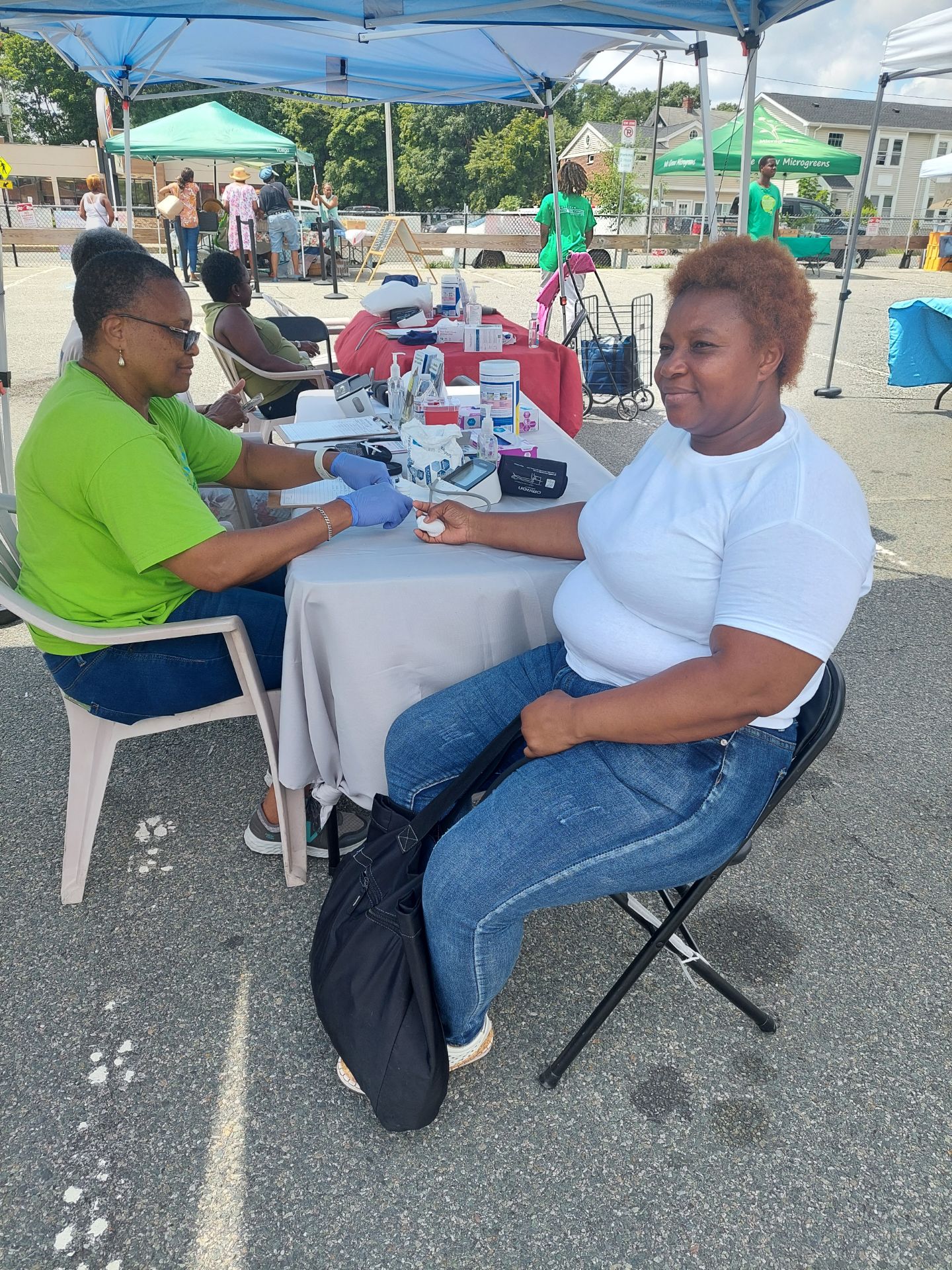
Cardiometabolic screenings and health education sessions across Greater Boston between 2023 and 2025.
Participants at 20+ sites in 10+ neighborhoods.
Screening growth between 2023 and 2025.
Cases of severe high blood pressure identified and referred to care, including 22 in 2025.
Participant retention, sustained by trusted community health workers.
Median cost of care for one U.S. hospital admission for a hypertensive crisis, 2016 to 2022. Source: Nahle T. et al., J Clin Hypertens 2026;28:e70207 (National Inpatient Sample, 2016 to 2022).
Behind every data point is a person.
Behind our 47+ cases of severe high blood pressure are people who mostly felt fine. Most had no idea their numbers were dangerous.
People come back because they trust our community health workers. That trust is what makes the next finding possible.
People who keep coming back do better.
They improve at close to three times the rate of one-time attendees.
That happens because our community health workers live in the neighborhoods they serve and follow up.
Community-generated data belongs to the community that produced it.
Our data lives in Essyl, a bespoke HIPAA-compliant platform built by HGF for care coordination and outcome tracking. The figures on this page come from records kept in Essyl across 20+ sites in 10+ Greater Boston neighborhoods.
We share this evidence with clinical partners, funders, and researchers.
We see you before, during, and after.
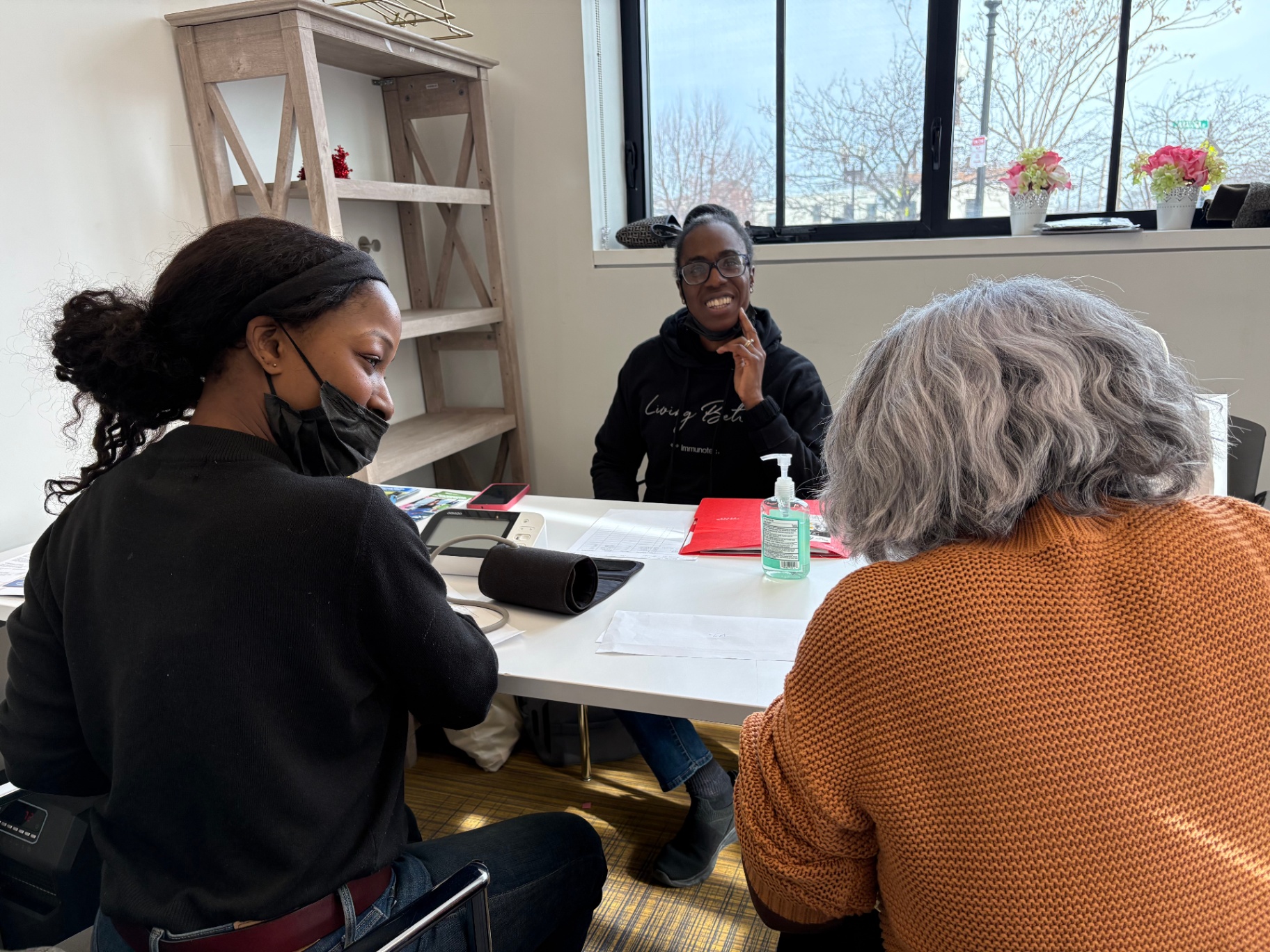
We are there before a problem becomes an emergency, alongside clinical care when it does, and following up after. A community health worker who knows your name, speaks your language, and will be back next month does not replace your doctor. She is the reason you go to your doctor, stay on your medication, and come back when something feels wrong. That is what makes clinical care work better for more people.
“If you have early intervention, you have better outcomes. So screening matters. Access is not equal across the board, and neither is health care.”
Patricia Nunn, RN, Community Health Worker, Heart of a Giant Foundation